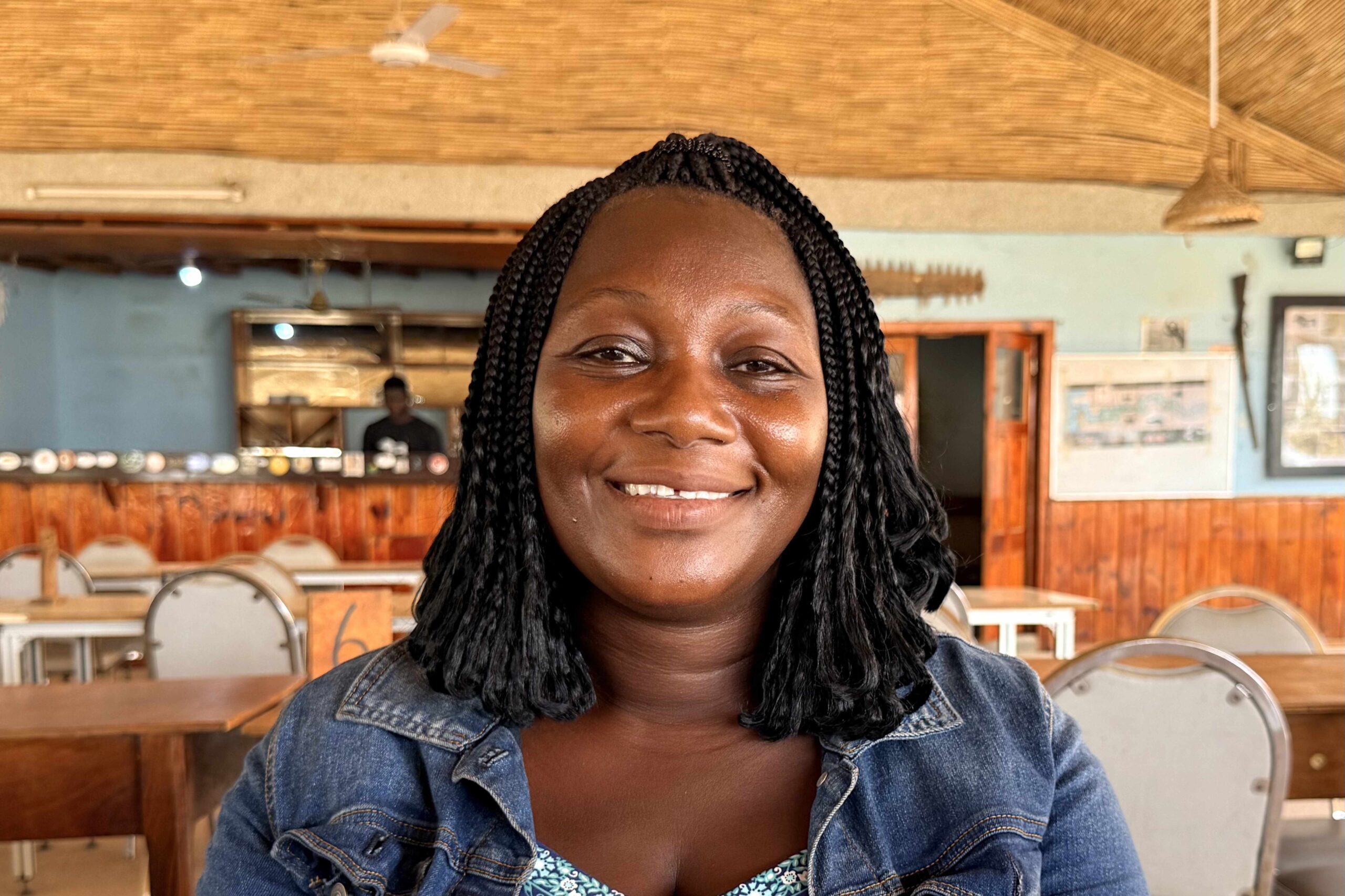
A Liberian beekeeper attending a training in The Gambia gained valuable insights and practical beekeeping techniques through exchanges with Gambian counterparts, demonstrating the power of peer-to-peer learning and regional knowledge sharing.
10 June 2026 – For years, Kuku Z. Tarkwia, Chairperson of the Twah River Beekeepers Association (TRIBA) in Liberia, managed her hives using mostly traditional methods passed down through experience. While these methods supported basic honey production, she often faced challenges with bee losses, unpredictable weather conditions, weak hive structures,and limited knowledge of improved beekeeping materials and management practices.
One of the key challenges she identified in her own practice was the use of inappropriate local materials for constructing beehives. The wooden sticks commonly used in her community were often vulnerable to termite attacks, which weakened the hives and contributed to colony loss over time.
Today, following a cross-country learning exchange under the FAO-supported Building Resilience (BR-II) workshop in The Gambia, she is returning home with new practical skills and ideas that she intends to apply to strengthen her beekeeping activities and support fellow TRIBA members.
The exchange brought together Forest and Farm Producer Organizations (FFPOs) from The Gambia and Liberia for hands-on learning on climate adaptation, sustainable natural resource management, and improved monitoring practices. For Kuku, the field visits and practical sessions with Gambian beekeepers provided a new understanding of how to better protect bee colonies and improve honey production.
“I have learned very practical techniques that will help me keep my bees alive, especially during difficult weather conditions,” she said. “I now understand how hive placement, local materials, and proper seasonal management can reduce bee losses and improve production. I will take these lessons back to Liberia and share them with other TRIBA members.”
During the exchange, she also participated in field visits where she observed how Gambian beekeepers manage their hives using simple, locally available materials adapted to climate conditions. These practices, she noted, were practical, low-cost, and easy to apply in her own context.
Beyond technical beekeeping practices, Kuku also highlighted an important lesson she observed during the exchange: the way different community groups share and manage natural resources in The Gambia. She noted that beekeepers and traditional healers are often allocated designated spaces to carry out their activities in harmony, reducing conflict and improving coordination in the use of forest resources.
“I also saw that in The Gambia, beekeepers and traditional healers are given space to carry out their activities side by side in an organized way,” she explained. “This helps different groups work together and manage natural resources more effectively. We do not yet have this kind of arrangement in Liberia, but I believe it is something very important that I would like to introduce when I return.”
The exchange highlighted the value of peer-to-peer learning between producer organizations, particularly in strengthening climate resilience in forest-based livelihoods. Beekeeping, which plays a key role in income generation, food security, and ecosystem conservation, was identified as an area where simple innovations and shared learning can deliver significant impact.
Participants emphasized that practical, field-based learning was more effective than classroom-based training, as it allowed them to directly observe and apply techniques in real-life conditions.
The Building Resilience initiative under the Forest and Farm Facility (FFF) continues to support such exchanges, enabling producer organizations to strengthen skills, share knowledge, and adopt climate-smart practices that improve livelihoods and resilience.
Kuku Z. Tarkwia is expected to share the knowledge gained with fellow TRIBA members upon her return to Liberia, contributing to improved hive management, reduced bee losses, and stronger, more sustainable honey production systems.